
Many service business websites present information but fail to actively guide potential clients, leading to confusion and missed opportunities. Learn how to transform your website from a passive brochure into an intentional guide that clarifies your offer, builds...
The Problem with Passive Websites: Information Overload, Not Client Guidance
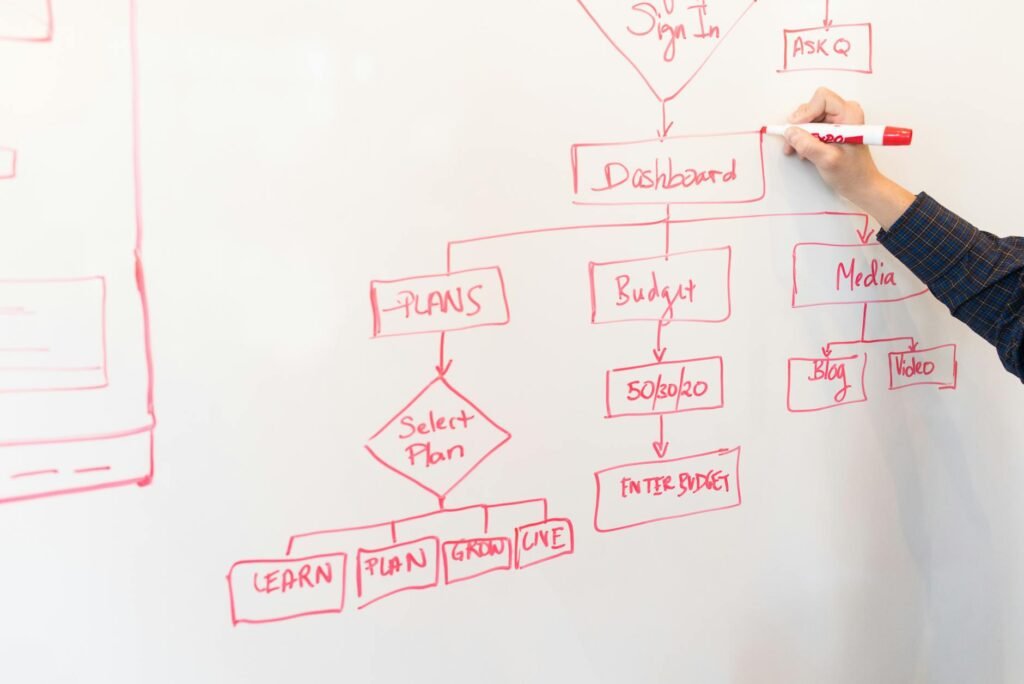
Many service businesses invest in a website that looks professional and lists their services. It acts like a digital brochure, presenting information clearly. The problem? A brochure presents; it doesn’t actively guide. This subtle but critical difference often leaves potential clients confused, overwhelmed, or unsure of what to do next. The result is missed opportunities for qualified inquiries and a website that isn’t working hard enough for your business.
Your website shouldn’t just be a static display of what you offer. It needs to be an active participant in your client acquisition process, clarifying your unique value, building trust effectively, and directing visitors confidently towards the right next step. If your website isn’t doing this, it’s leaving money on the table.
Why a Brochure Mentality Fails Your Service Business
Consider the typical journey of a prospect on a brochure-style website:
- They land on your homepage. It lists services, perhaps an ‘About Us’ section, and a contact form.
- They browse. They might click through a few service pages, trying to piece together if you’re the right fit.
- They get confused. Is this service for them? What’s the process? How much does it cost?
- They get overwhelmed. Too much undifferentiated information, no clear path forward.
- They leave. Without a clear prompt or confidence in the next step, they default to inaction.
This isn’t a failure of your services; it’s a failure of your website’s design to act as a guide. A good website should make the offer easier to understand, make trust easier to build, and make the next step easier to take.
From Brochure to Guide: Designing for Clear Client Action

Transforming your website from a passive brochure into an active guide requires an intentional shift in perspective. It means designing with your client’s decision-making process at the forefront. Here’s how to do it:
1. Clarify Your Unique Offer with Precision
Your website must answer the core question immediately: “What do you do, and for whom?” This isn’t just about listing services; it’s about articulating your unique value proposition clearly and concisely.
- Speak to a specific problem: Instead of “Web Design Services,” try “Website Design for Service Businesses Struggling to Convert Leads.”
- Highlight your ideal client: Be explicit about who you serve best. This helps qualified prospects self-identify and unqualified ones self-select out, saving everyone time.
- Define your process: Break down complex services into understandable steps. This demystifies your work and builds confidence.
Practical Check: Ask a stranger to visit your homepage. Can they explain what you do and who you do it for in 30 seconds? If not, simplify.
2. Build Trust Actively and Intentionally
Trust isn’t just about showing a logo wall. It’s built through clarity, consistency, and demonstrating expertise and empathy. A guiding website anticipates questions and provides reassurance.
- Show, don’t just tell: Instead of saying “we’re experts,” showcase your insights through blog articles, case studies (without inventing results), or clear explanations of your approach.
- Address common concerns: Use an FAQ section to proactively answer questions about your process, pricing structure (without listing specific prices), or what clients can expect.
- Humanize your brand: A genuine ‘About Us’ section that shares your values and approach can be far more impactful than a dry corporate bio.
Practical Check: Review your website for any jargon or vague statements. Replace them with clear, benefit-oriented language that addresses your client’s needs and fears.
3. Direct Visitors Confidently to the Right Next Step
This is where the “guide” truly differentiates itself from the “brochure.” A guiding website has a clear, singular call to action (CTA) for each stage of the client journey.
- Define the right next step: For a service business, this is usually a consultation, a discovery call, or a detailed inquiry form, not just a generic “Contact Us.”
- Make CTAs prominent and specific: Use action-oriented language like “Schedule a Discovery Call,” “Request a Consultation,” or “Get a Custom Proposal.”
- Reduce friction: Ensure your forms are concise and easy to complete. Don’t ask for unnecessary information upfront.
- Offer tiered engagement: Not everyone is ready to buy. Provide options like “Download Our Service Guide” or “Explore Our Approach” for those still researching.
Practical Check: Can a visitor easily identify the primary action you want them to take on every key page? Is there too much choice, leading to analysis paralysis?
The Business Outcome: Qualified Engagement, Not Just Traffic
When your website functions as an active guide, you’re not just getting more traffic; you’re attracting more qualified traffic. You’re transforming passive interest into productive engagement. This means:
- Fewer wasted conversations with mismatched prospects.
- Clients who understand your value before they even speak to you.
- A smoother sales process built on clarity and trust.
- A measurable improvement in your lead generation efforts.
Your website is a critical business asset. It should not just exist; it should actively work to clarify your offer, build trust, and guide your ideal clients to take the next step. This isn’t about vanity; it’s about clear digital execution that leads to tangible business outcomes.
Ready to Make Your Website a Client-Guiding Asset?
If your current website feels more like a static brochure than a dynamic guide, it’s time for a strategic assessment. At Naro Digital, we specialize in website design and development focused on clarity, speed, and conversion. We help service businesses like yours structure their online presence to make the offer easier to understand, trust easier to build, and the next step easier to take.
Let’s discuss how your website can become a more effective tool for attracting and converting your ideal clients. Get in touch today to explore how we can help clarify your digital execution for stronger business growth.